Reviewing Christmas Scenic Backgrounds for Embroidery
As a designer who has spent years translating digital art into thread, I approach every new machine embroidery design with a mix of excitement and skepticism. We have all been there: you see a beautiful illustration online, download the embroidery file, and hope it translates well to fabric. Today, I am taking a close look at Christmas Scenic Backgrounds. This collection falls under the category of Illustrations, which immediately raises questions about complexity, stitch density, and final visual impact on real-world products.
My goal here is not to sell you the product but to evaluate its practicality for your next project. Whether you are an Etsy seller preparing for the holiday rush or a hobbyist making personalized gifts, understanding how these scenes behave under the needle is crucial.
First Impressions and Visual Mood
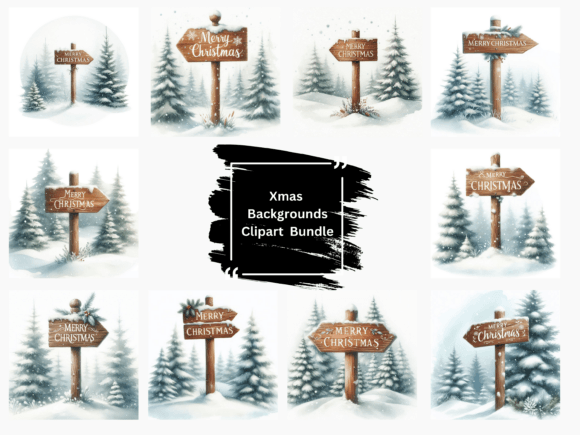
The first thing that strikes me about Christmas Scenic Backgrounds is the atmospheric quality. These are not just simple icons; they are composed scenes that evoke a specific mood—cozy, nostalgic, and festive. The layout suggests a balance between negative space and detailed elements, which is vital for embroidery. If a design is too cluttered, it becomes a muddy mess of thread. If it is too sparse, it lacks impact.
In my initial review, the visual personality feels warm and inviting. The shapes appear distinct enough to maintain clarity even when reduced in size. For a designer, this is promising. It suggests that the original illustrator considered how lines might translate into satin stitch or fill stitch boundaries. However, illustrations often rely on subtle gradients and fine lines that do not always survive the conversion to thread. We need to dig deeper into how these backgrounds perform in actual stitching scenarios.
Real-World Application: The Tote Bag Test
To truly judge a design, I imagine it on a specific product. Let’s consider a custom embroidered tote bag. This is a popular item for small shop products and holiday gifts. A tote bag offers a large, flat canvas, which is ideal for scenic designs. I envision placing one of the Christmas Scenic Backgrounds centrally on a natural cotton canvas.
In this scenario, the design needs to hold its own against the texture of the fabric. Canvas has a visible weave, so the stitch density must be sufficient to cover the material without being so dense that it causes puckering. If the background elements are too fine, they might get lost in the fabric’s texture. Conversely, if the thread colors are well-chosen, the scene can pop beautifully. I would recommend using a high-quality polyester thread for its sheen and durability, ensuring the finished product looks professional rather than homemade in a negative sense.
Beyond tote bags, these designs could work wonderfully on sweatshirt embroidery. A chest-left placement on a heavyweight fleece would require careful attention to stabilizer choice. The bulk of the fleece combined with a dense scenic background could make the garment stiff if not managed correctly. This is where practical design judgment comes in: knowing when to scale down or simplify.
Navigating Fabric and Hoop Constraints
Not every surface is forgiving. When working with Christmas Scenic Backgrounds, you must consider where the design should be used carefully. Small hoop sizes present a significant challenge. If you attempt to fit a complex scenic illustration into a 4x4 inch hoop, you risk losing critical details. Tiny elements may merge, and text—if included—could become illegible. Always check the recommended hoop size before purchasing or stitching.
Textured fabrics, such as terry cloth towels or ribbed knits, can distort fine lines. On a kitchen towel, a scenic background might look impressive from a distance but messy up close. For these items, I suggest testing the design on scrap fabric first. This allows you to see how the running stitch outlines interact with the pile of the fabric.
Dark fabrics also require strategic planning. Light-colored threads on dark fabric can sometimes show gaps if the underlay is not sufficient. Additionally, curved surfaces like caps demand caution. A wide scenic background will distort when stitched onto the front panel of a baseball cap. For caps, I would recommend isolating a smaller element from the scene rather than using the full background.
Enhancing Brand Value and Customer Trust
For craft business owners and Etsy sellers, the quality of your embroidery directly impacts customer trust. A well-executed Christmas Scenic Backgrounds design can elevate a simple item into a boutique product. It adds perceived value. Customers are willing to pay more for items that look intricate and thoughtful.
However, consistency is key. If you use these illustrations across a range of products—aprons, pillow covers, and baby clothes—you must ensure the stitching quality remains high. Poor tension or loose threads can undermine the professionalism of your brand. Use proper stabilizer to prevent shifting, especially on stretchy fabrics like those used in baby embroidery. A shaky outline ruins the illusion of a polished handmade product.
Moreover, these designs can serve as excellent design assets for printable mockups. Before you stitch a single thread, create digital previews to gauge customer interest. This saves time and materials. Show potential buyers how the applique design or full embroidery might look on different colored garments. This transparency builds buyer engagement and reduces return rates.
Practical Notes for the Embroidery Designer
Before you commit to a large production run or a high-stakes gift, keep these practical tips in mind:
- Test on Scrap Fabric: Always stitch a test piece on the same type of fabric you intend to use for the final product. This reveals issues with tension and density.
- Check Thread Color Contrast: Ensure your thread colors provide enough contrast against the fabric. Low contrast can make detailed scenes look flat.
- Review Stitch Density: High-density areas can cause fabric distortion. Consider using a cutaway stabilizer for stretchy materials to provide extra support.
- Inspect Small Details: Zoom in on the digital file. Are there tiny isolated stitches that might pull out? Edit them out if necessary.
- Mockup in Black and White: Convert your preview to grayscale. If the design loses its definition in black and white, it may lack sufficient contrast in real life.
- Confirm Licensing: If you plan to sell finished items or digital products, verify the license terms. Some designers allow commercial use for physical goods but restrict digital resale.
Ultimately, Christmas Scenic Backgrounds offers a rich visual resource for holiday embroidery. Its success depends on your ability to adapt it to the constraints of thread and fabric. By respecting the limitations of your machine and materials, you can transform these illustrations into stunning, tangible works of art. Whether for a personalized gift or a commercial embroidery project, thoughtful execution is what separates a good product from a great one.